
Imagine constantly moving between sales, operations, accounts, and HR for every small query or fire. It seems like each one has a chair, and you’re the only one running in a game of musical chairs where the music never stops. This is founder dependency, when every decision has to pass through the founder. You answer all five before lunch, and you haven’t even started your own work. For a while it feels good, because everyone needs you.
This blog explores what founder dependency looks like in a B2B business, warning signs, and what to do about it.
Why Founder Dependency Happens
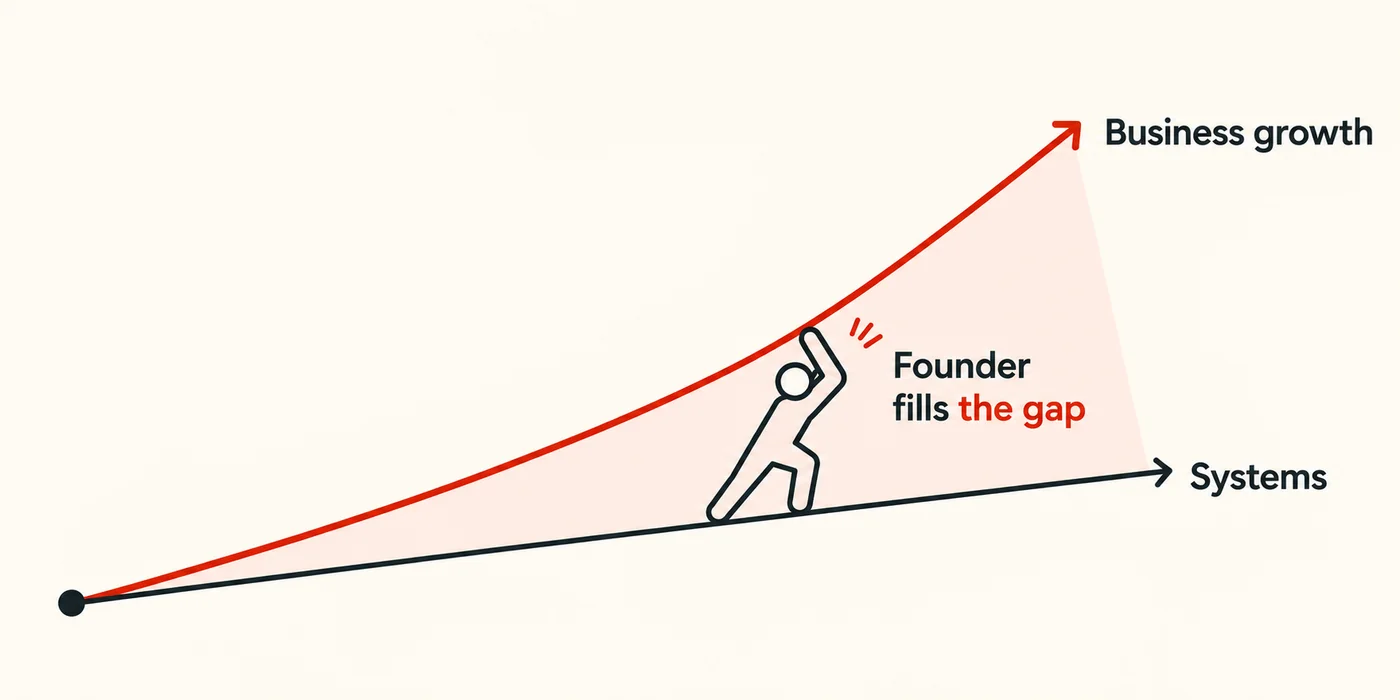
Founder dependency happens naturally as B2B businesses grow. In the early days, founders know everything, do everything, and decide everything, and it worked. The problem is that the habits that build a business from zero are the same habits that stop it from growing.
Apart from this foundational reason, founder dependency develops because businesses grow faster than their systems.
Common reasons include:
- Lack of documented processes
- Weak delegation
- Unclear roles
- Poor accountability
- Underdeveloped managers
Signs Your Business Is Dependent on the Founder
Several signs show the business depends on the founder, but none of these is fixed by the founder working harder. You need structure to fix them, and a Growth Readiness Review is usually the first step.
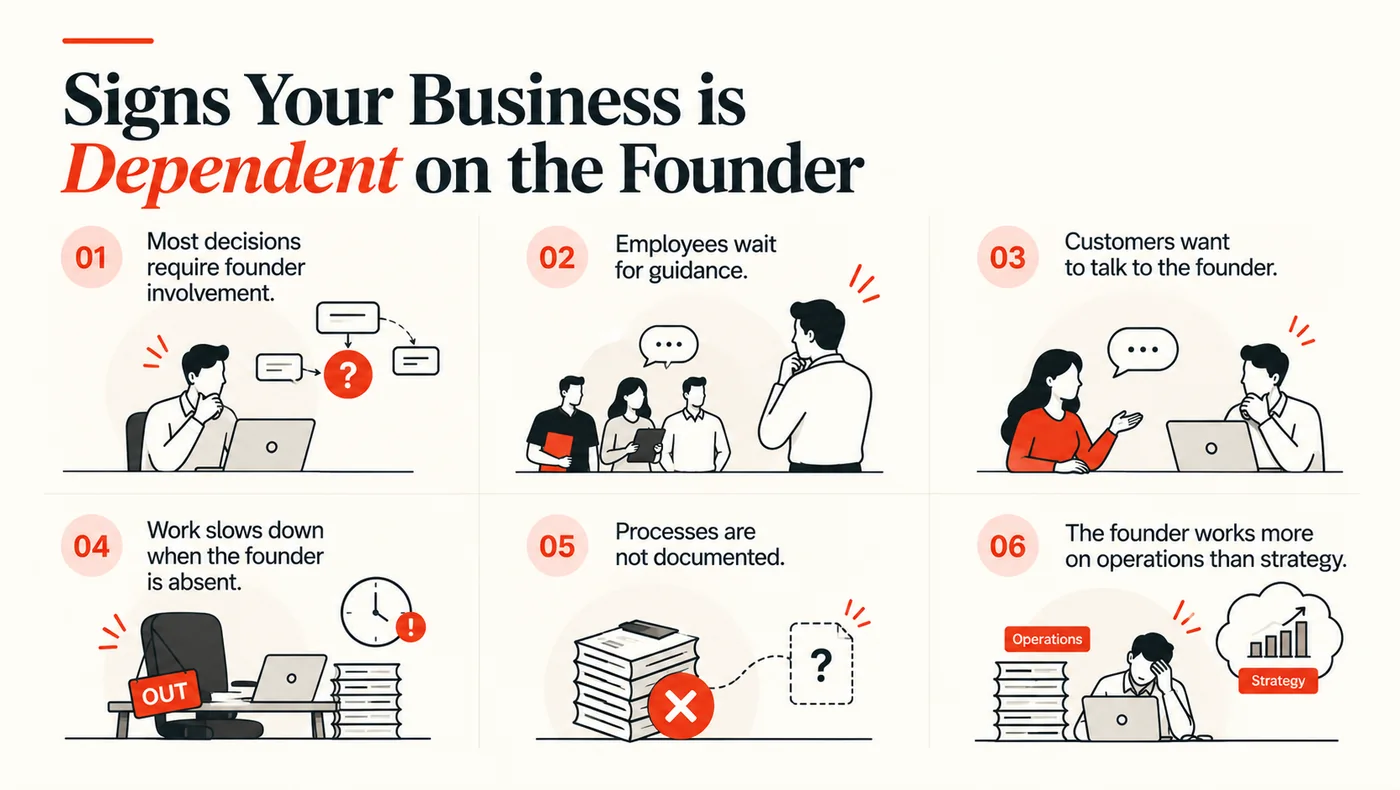
- Most decisions require founder involvement.
- Employees wait for guidance.
- Customers want to talk to the founder.
- Work slows down when the founder is absent.
- Processes are not documented.
- The founder works more on operations than strategy.
What Founder Dependency Costs
Here is a quick glimpse of what founder dependency costs a company:
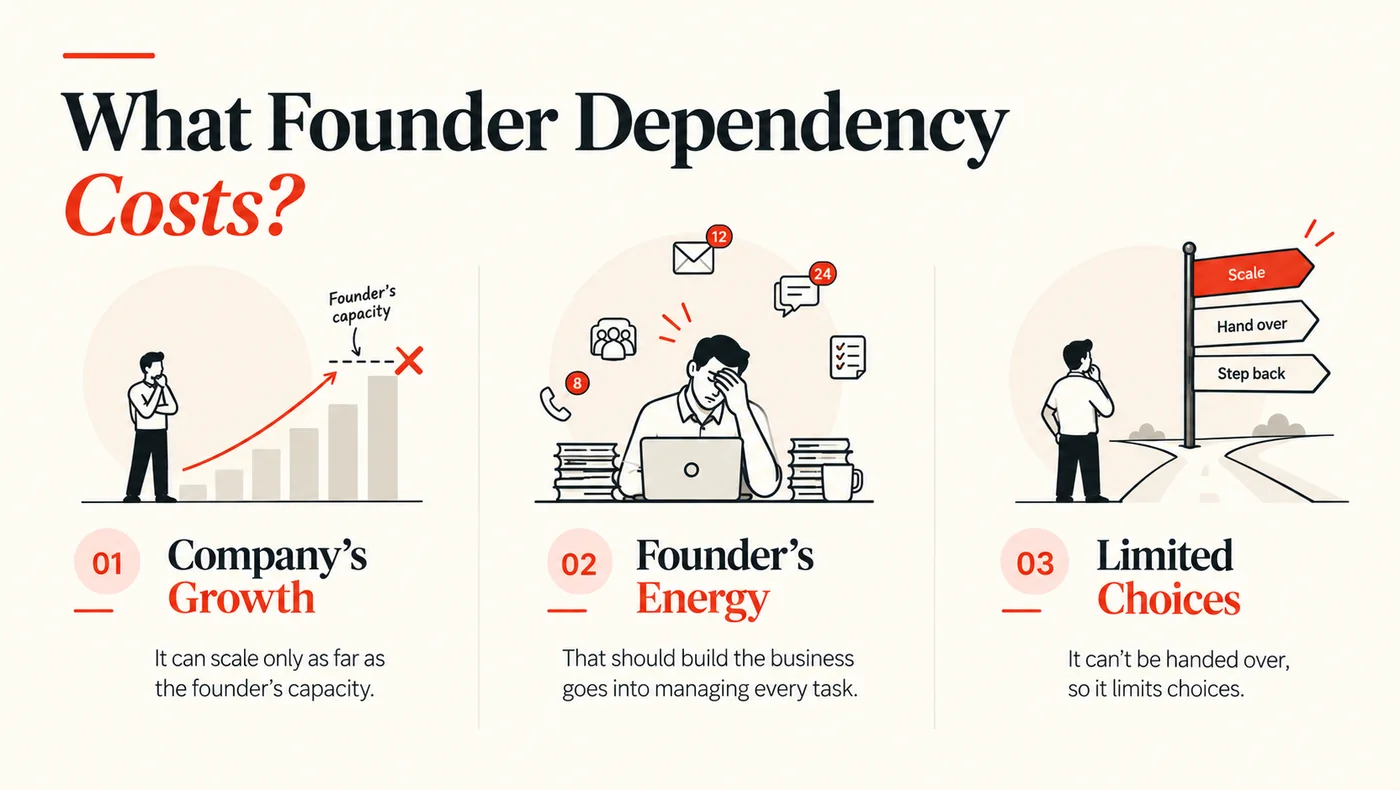
Company’s Growth: When B2B business growth depends on the founder, it can scale only as far as the founder’s capacity. After that, boosting revenue adds load, and the founder becomes the bottleneck.
Founder’s Energy: Every person has a limited amount of energy. Founder’s energy that should go into building the business goes into managing every task.
Limited Choices: If a business can only grow under its founder, it can’t be handed over, and the founder can’t step back, so founder dependency limits choices.
How to Reduce Founder Dependency: 5 Practical Changes
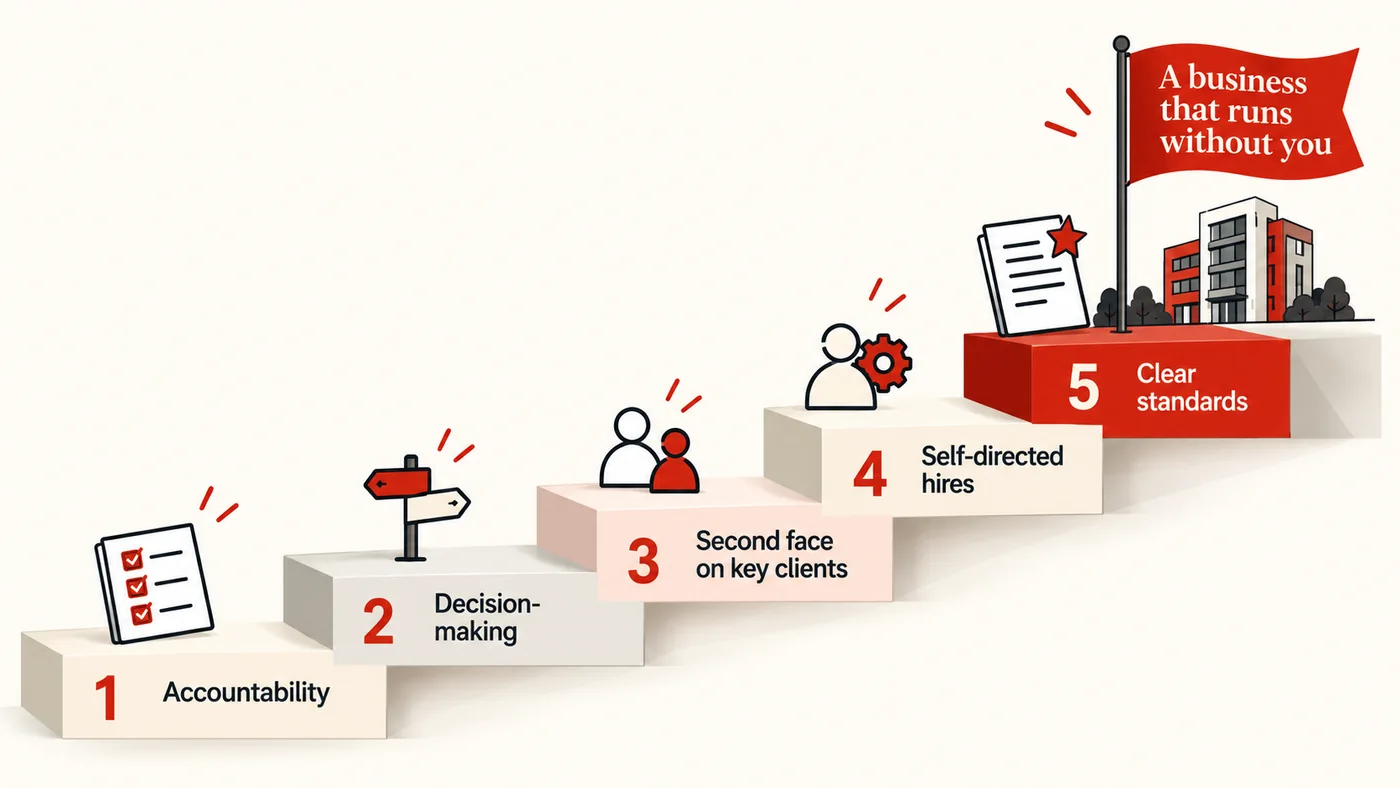
Restructure Organisations Around Accountability
If everyone still reports to you and nothing moves without you, restructure your organisation around accountability. Provide clear ownership and make sure every function has a leader who owns results and decision authority. It helps you become less involved, and your team performs better.
Enable Decision Making in Your Team
Initially, walk through decisions with your team and discuss what worked and what didn’t. When someone asks for a decision, ask what they suggest; this teaches pattern recognition, and they make better, faster decisions without needing your input.
Put a Second Face on Your Relationship
A client relationship that only works with the founder is a single point of failure. Consider involving a capable employee in the next meetings, include them in the thread, and let them own the follow-up.
Hire People Who Don’t Need Your Leadership
Hiring people for some tasks while still approving every piece means everything still routes through you. Trust your team and let them work, and reserve your judgment for the exceptions that genuinely need it.
Hand Over Execution with Clear Standards
Describe to your team what a “good job” looks like before handing over recurring work. Clearly state the decision boundary and the expected result, and then inspect the result. Do not try to modify their method. Different is not wrong when the agreed standard is met.
Frequently Asked Questions
Filed under
- Founder dependency
- Delegation
- B2B growth